
Awero team
Making youth work visible: ALOUT’s approach to recognition
11 ოქტ, 15:39
A young person joins a local youth project. At first, they stay quiet. They watch from the edge of the group, unsure what they can offer. Over time, something shifts. They help plan an activity. They speak up in a discussion. They support someone else. They learn to listen, organise, reflect, take responsibility and make decisions with others.
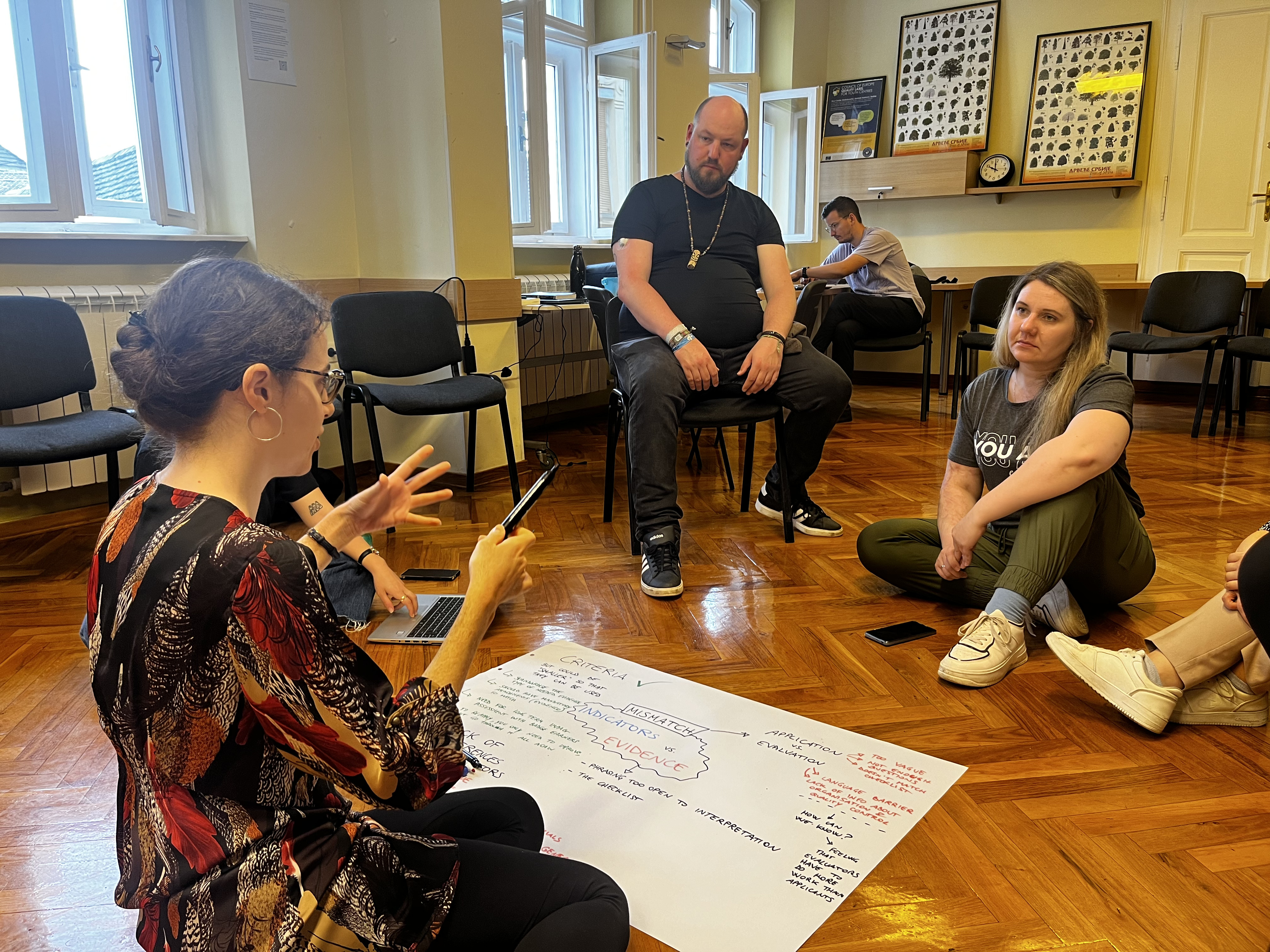
Everyone in the room can see the learning.
But what skills are needed to create the spaces where that learning happens?
Can the education system see them? Can an employer understand them? Can a national qualification framework recognise them?
Those are the questions at the heart of ALOUT, short for Advancing Learning Outcomes. Bringing together research from Austria, Italy, Lithuania, the Netherlands and Serbia, the ALOUT Joint Report explores a challenge many youth workers know well: their work changes lives and builds competences, yet the skills needed for youth workers are still too often difficult to describe in the formal language used by qualification systems, labour markets and policy frameworks.
The report puts it clearly: youth workers have the skills to create meaningful change, but they “consistently struggle to translate their daily practice into the formalised language” required for wider recognition.
That translation matters. Not because youth work should become more like school, university or employment training, but because young people and youth workers deserve recognition that can travel beyond one project, organisation or moment in time.
The gap between lived learning and formal recognition
Youth work is full of learning, but it rarely follows the shape of formal education.
It can happen around a table, in a youth centre, during a volunteering project, through peer mentoring, community action or a difficult conversation after something has gone wrong. It is relational, practical and reflective. Youth workers and young people learn by doing, trying, adapting and making sense of experience with others.
Qualification frameworks need learning to be written differently. They ask for outcomes: clear statements of knowledge or know-how which someone understands and can demonstrate after a learning process in any setting. They require levels, descriptors, evidence and assessment.
Neither language is wrong. The challenge is helping them understand each other without losing what makes youth work powerful.
The ALOUT report shows that this terminology gap appears in every participating country. Youth workers may talk about growth, participation, trust and confidence. Qualification systems ask for measurable, level-referenced outcomes. The issue is not just technical. It is cultural.
Five countries, different starting points
One strength of the ALOUT report is that it does not pretend Europe has a single recognition story.
Austria has one of the more structured approaches, with aufZAQ certifying youth work training programmes and linking some of them to the National Qualifications Framework. Lithuania has introduced a mandatory state certification system for youth workers, built around seven competences. The Netherlands has a legally anchored qualifications framework and a voluntary professional register, although youth work is still mostly connected to broader social work routes. Italy has no nationally regulated youth worker profession, but NINFEA has built a bottom-up competence validation system connected to existing labour market descriptors. Serbia has no formally recognised youth work qualification in its national framework, yet NAPOR’s multi-modular training programme already provides a serious sector-led route for professional development.
These examples show different routes into the same bigger question: how can youth work become visible and trusted without being squeezed into systems that do not understand it?
No country in the report has yet achieved full, systematic integration of youth work learning outcomes into a dedicated national qualification at a clearly defined European Qualifications Framework level. But each offers clues about what progress can look like.
Badges as bridges, not shortcuts
For Cities of Learning, this conversation is familiar.
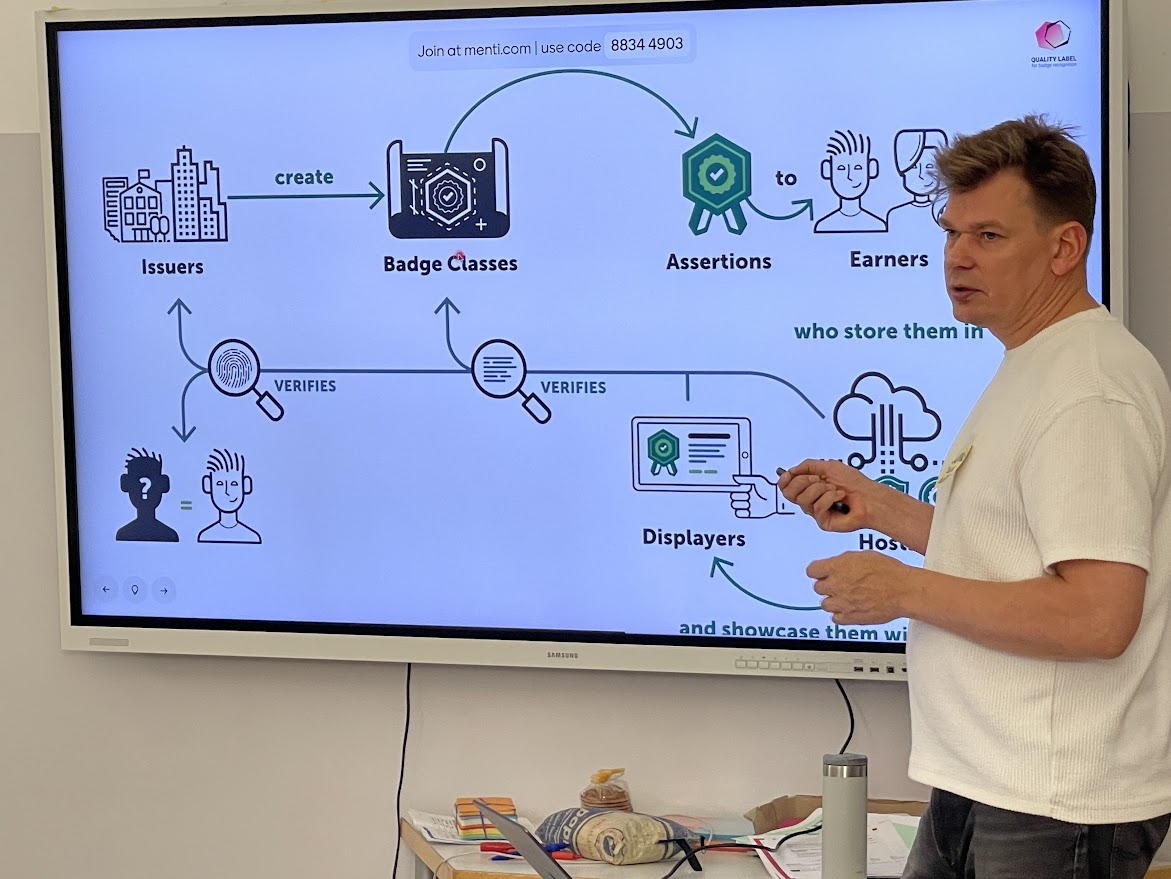
Open Badges have long offered a way to recognise learning that happens beyond the classroom: volunteering, civic action, creative projects, youth leadership, cultural learning, environmental action, digital skills and personal development. A badge can carry criteria, evidence, reflection and endorsement, and it can be validated. A playlist can guide learners through a pathway while still allowing choice and curiosity. A Badge Wallet can help someone carry their learning with them, rather than leaving it behind when a project ends.
In the context of ALOUT, Open Badges and micro-credentials are not a magic solution. They are bridges. They help translate lived experience into evidence and make achievements easier to share with educators, employers, public institutions and other organisations.
This connects directly to one of Cities of Learning’s main aims; not simply to issuing more badges, but making badges more relevant and valuable. It is about increased trust, strengthened collaboration between badge issuers, earners, endorsers and public institutions, and the growth learning ecosystems where non-formal learning is valued as part of lifelong learning.
Recognition takes capacity
The report is honest about what gets in the way.
Writing good learning outcomes takes time. Aligning them with national or European frameworks takes expertise. Quality assurance takes administration. For smaller youth organisations, especially those relying on volunteers or short-term project funding, this can be a heavy burden.
That is why ALOUT calls for shared infrastructure: practical glossaries, youth work-specific examples, step-by-step guides, peer learning and funding that recognises the real labour involved.
The report also points towards the potential of AI-supported tools, while offering an important caution. Generic AI can produce learning outcomes that look polished but miss the substance of youth work. The real opportunity is more thoughtful: digital tools trained around youth work language, values and competence frameworks, designed to support reflection rather than replace it.
A Europe where youth work counts
The ALOUT report is hopeful, starting from what already exists.
Austria shows how certification can help training providers describe learning more clearly. Italy shows how professional associations can build credibility from the ground up. Lithuania shows the value of a national competence framework. The Netherlands shows how registers, open badges and flexible assessment can support recognition. Serbia shows how sustained sector leadership can prepare the ground for future formal alignment.
The next step is not to make youth work less human. It is to make its learning more visible.
That means supporting youth workers to describe the skills they develop. It means giving them evidence they can carry with pride. It means helping policymakers and employers recognise the competences developed in youth work as essential parts of personal, social and civic life.
Across Europe, youth workers are already helping young people grow. ALOUT reminds us that recognition is not about inventing value where none existed before. It is about noticing the value that is already there, giving it language, and making sure it can be seen.
Supported by the European Union
The ALOUT project is co-funded by the Erasmus+ Programme of the European Union. Agreement No. 2025-1-AT01-KA220-YOU-000363996

Share:

Awero not-for-profit organisation manages this platform and develops it together with leading educational organisations. The European Union's programme Erasmus+ granted co-funding for building the first version of this platform. Contact support@awero.org.
Platform
Discover
Change to another language: